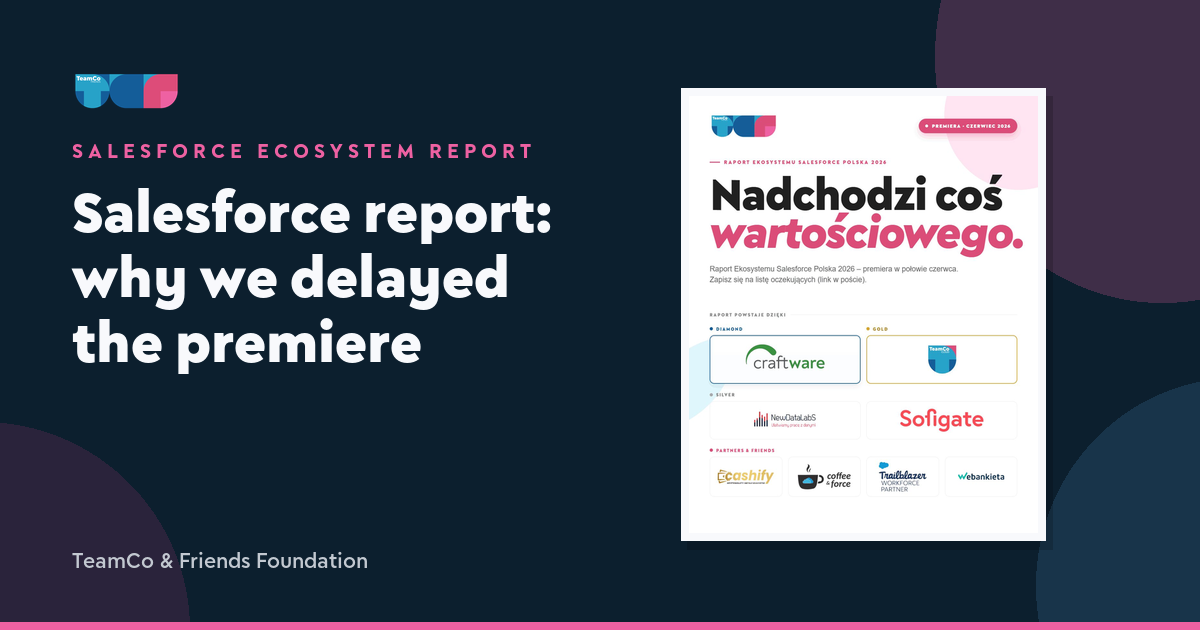
Salesforce report: why we delayed the premiere
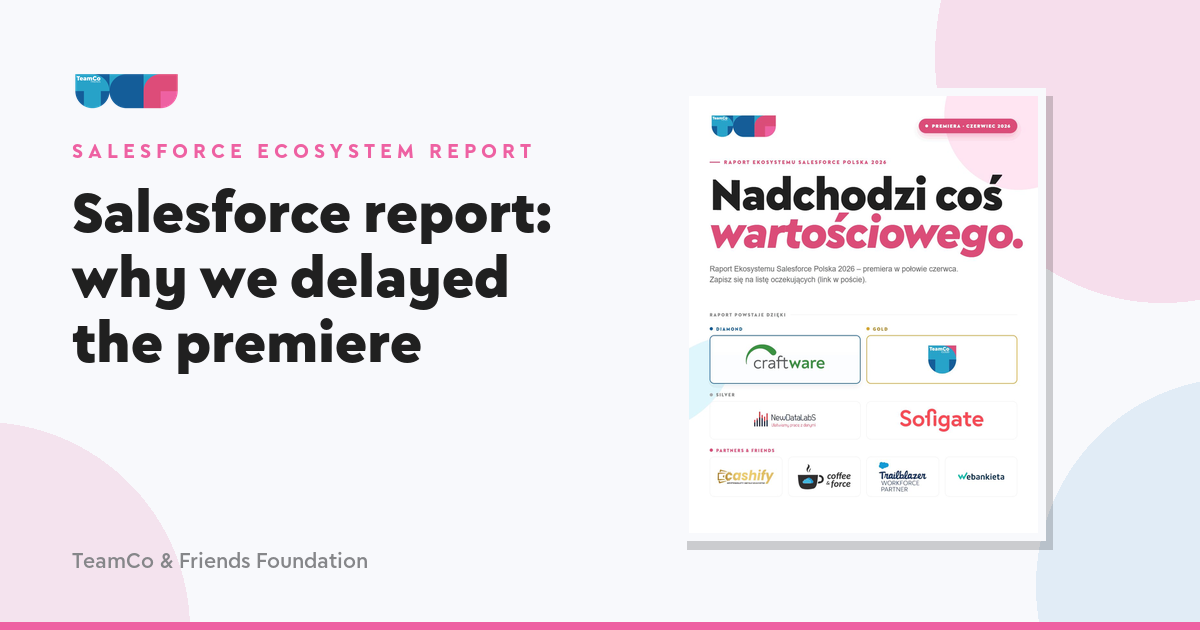
The Salesforce report slipped by a few weeks and we said so plainly. Why we chose quality over the deadline, and what that choice means for the whole community.
Read more27 December 2025
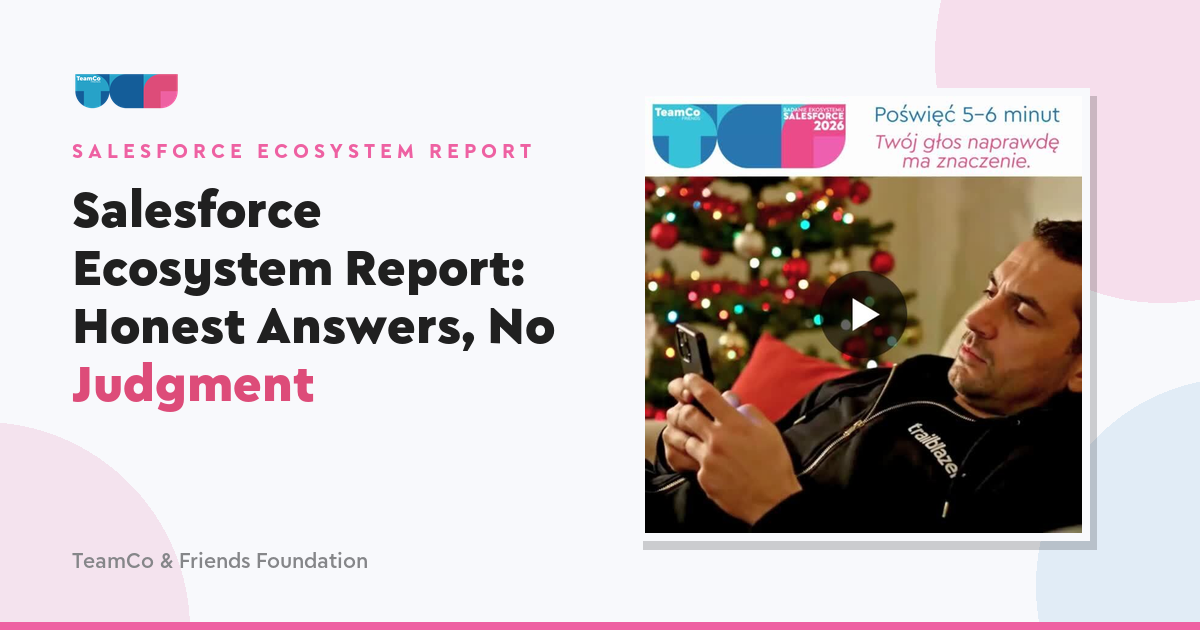
The most useful surveys are the ones people answer honestly. That sounds obvious, but it is the hardest part to get right, because honesty needs safety. The Salesforce Ecosystem Study Poland 2026 is built around one rule: anonymous answers, no company names, no judgment, in roughly five to six minutes.
When a survey can be traced back to you, you soften your answers. You round the salary up, you tone down the frustration, you write what looks reasonable rather than what is true. Strip the name away and something changes: people say what they actually think about pay, working conditions, and where the market is heading.
This is not a hunch. The tendency to give socially acceptable answers instead of true ones is among the best-documented distortions in survey research, and it has been the starting point for research institutions designing questionnaires for decades — described, among others, by the Pew Research Center in its material on survey methodology. The more sensitive the question, the wider the gap between what a person says with their name attached and what they answer anonymously. And questions about salary, about why someone left a job, and about what a project really looks like are sensitive by definition.
Anonymity is therefore an instrument of measurement here, not a courtesy to the respondent. Without it, the report would just be a better-looking rumour.
The Salesforce Ecosystem Study Poland collects no company names and offers no way to trace a single response back to an individual. We are not grading anyone and we are not naming employers. The report describes phenomena, not people.
That distinction also has a hard legal basis. European law treats information that cannot be linked to an identifiable person differently from personal data — Recital 26 of the GDPR states plainly that data protection principles do not apply to anonymous information. For a respondent this means something simple: you are not handing over something that can later be used against you, because that something does not exist.
How the study is run is described on the study page. We do not hide the methodology behind marketing — if someone is to trust a number, they need to know where it came from.
An honest piece about a method has to say what that method takes away. Anonymity is not free.
We cannot follow up. Since we do not know who answered, we cannot go back to a respondent to unpack an interesting reply. Every question has to be understood the first time.
We cannot verify a single declaration. We cannot check whether a stated rate is true. All we can do is make sure the respondent has no reason to lie — which is exactly what anonymity is for.
We cannot build an employer ranking from it. Without company names there is no "who pays best" list. That is a deliberate choice: the goal is to help specialists and employers understand the market with facts in hand, not to start arguments.
It is the same principle Fundacja TeamCo & Friends applies to publishing results: we show what the survey returned, including when the result does not fit a convenient narrative. You can see it in the finding that one in two Salesforce specialists in Poland works for a partner — a number that does not please every side of the market, but is what respondents said.
A single response takes five to six minutes. On its own it is one data point and means nothing. Multiplied across the community, those six minutes become the clearest picture of the Polish Salesforce ecosystem that exists: skills, trends and working conditions described by the people living them rather than guessed at from outside.
The same honest answers that go in come back out as the Salesforce Ecosystem Report Poland — the kind of hard data you can put on the table in a raise conversation or a hiring decision, instead of "I heard that...". That includes the topics everyone asks about and few people have numbers for, such as the real adoption of AI tools in the Polish ecosystem.
The length of the survey is itself the second methodological decision alongside anonymity, and the two travel together. A questionnaire that takes half an hour gets answers from a handful of the most committed people, and that distorts the picture just as effectively as a lack of anonymity: you end up describing not the market, but the people with a surplus of time and motivation. Five to six minutes is a deliberate trade — fewer questions in exchange for a cross-section that genuinely represents the ecosystem. A shorter survey also means fewer fields in which a respondent could accidentally leave something identifying, so the two principles reinforce each other.
It is also worth remembering that this is a community study, not a poll about the market at large. The people answering work with the platform — including those learning it as they go, using the free material on Trailhead. That is why the number of responses matters: the broader the cross-section, the less the study describes a single bubble and the more it describes the whole ecosystem.
Is the Salesforce Ecosystem Study Poland survey genuinely anonymous? Yes. The study collects no company names and no data that would link a response to a specific person. That is what makes honest answers about pay and working conditions possible.
How long does the survey take? About five to six minutes for a complete response, as stated in the Salesforce Ecosystem Study Poland 2026 campaign.
Does the report name specific employers? No. The Salesforce Ecosystem Report Poland describes phenomena, not people or companies. No employer ranking comes out of it, and that is a deliberate methodological decision.
Where do my answers end up? Collected and written up without spin, they become the Salesforce Ecosystem Report Poland, created by Fundacja TeamCo & Friends. The methodology is described on the study page.
A transparent market is not built from marketing. It is built from honest answers people feel safe enough to give. Six minutes, given anonymously, is a small thing — and it is exactly what turns hallway gossip into data the whole ecosystem can trust.
If you want the next edition to describe this market more precisely than the last one, take the survey. No name, no company, no judgment.
The Salesforce report slipped by a few weeks and we said so plainly. Why we chose quality over the deadline, and what that choice means for the whole community.
Read more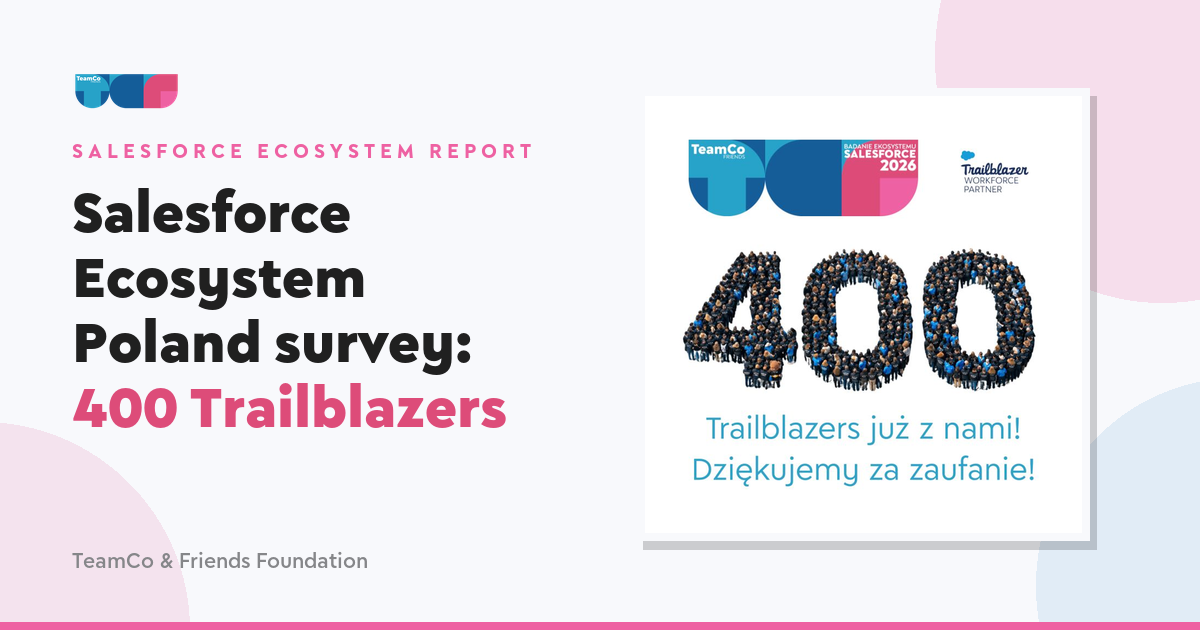
The Salesforce Ecosystem Poland survey passed 400 Trailblazers. See why every anonymous voice genuinely shapes the picture of the Polish Salesforce market.
Read more
The Salesforce ecosystem survey took five minutes and produced hard data on the Polish Salesforce market. See why those five minutes had a real, lasting impact.
Read moreOnce a month, the essentials from the Polish Salesforce ecosystem - data, trends, events. No spam, no ads, just the facts.
Sign-ups coming soon
Join 400+ specialists, managers and leaders from the Polish Salesforce ecosystem who read us every month