What builds a Salesforce community beyond a single event?
A Salesforce community is built by combining practical knowledge, regular contact and visible recognition for the people doing the work. For Fundacja TeamCo & Friends, meetups, promoting Polish Trailblazer and the initiatives around the ecosystem survey are examples of those three elements. They are not proof that one effective model exists for everyone. What they do show is which questions are worth asking before the next event is planned.
Fundacja TeamCo & Friends is setting out editorial conclusions drawn from its own reports and announcements here, not the results of an experiment measuring community effectiveness. The distinction matters: attendance at a meeting can be documented, but an effect on trust, skills growth or later collaboration should not be claimed without data. The most important lesson is therefore a simple one: concrete value for the participant should come before the story about the brand.
Why start with people's questions rather than a company pitch?
Fundacja TeamCo & Friends set out the NO BULLSH!T principle in its post on why the report exists: conversations with people working in the ecosystem surface questions that impressions alone cannot answer. The response is meant to be a shared point of reference, not another declaration that the industry is exceptional.
The practical conclusion for an organiser is this: first decide which problem a participant should leave the meeting feeling less alone with. It might be integration architecture, dashboard readability or a choice of learning direction. Only then decide what role your organisation plays in that conversation. A company slide does not replace an answer to the question somebody arrived with.
Fundacja TeamCo & Friends also keeps its community work separate from commercial services. An event write-up on the Foundation's blog is not a recruitment advert. It exists so people can find knowledge and each other, not to turn every contact into a sales pitch.
What do the different meetup agendas in Warsaw and Kraków teach us?
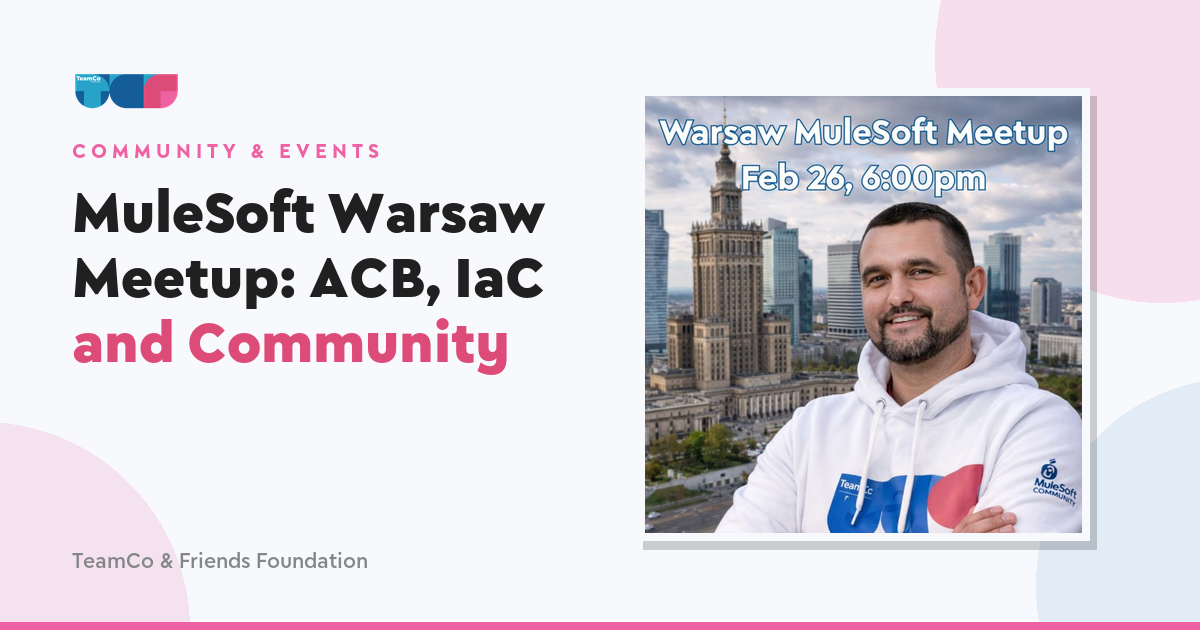
The event announcements recorded by Fundacja TeamCo & Friends show different entry points into the same ecosystem. The Warsaw MuleSoft meetup covered Anypoint Code Builder and infrastructure as code. The Salesforce Architect Group agenda dealt with applying Agentforce to a complex ordering process. Kraków's Salesforce User Group announced hands-on work with data and the topic of Vibe Coding.
The shared lesson is not "talk about AI everywhere". Quite the opposite: a concrete problem lets a participant judge whether it is worth attending. Someone working on an integration needs a different conversation from someone designing a report for a business user. A shared Salesforce brand does not remove the difference between those needs.
An event announcement confirms the planned topic, not its outcome. That is why Fundacja TeamCo & Friends draws no claims from these agendas about the number of connections made or any growth in participants' skills. What is useful for the next organiser is the pattern itself: name the problem, show how it is worked on, and leave room for questions about the limits of the solution.
What does the DataFam write-up say about the value of exchanging knowledge?
The write-up from the DataFam meeting in Warsaw contains a more concrete trace than a general thank-you for the atmosphere. Fundacja TeamCo & Friends pointed to inspiration on dashboard UX and data interpretation that may have helped with visualising the report. The write-up also touched on using AI in Tableau work.
The value of such an exchange can be described without declaring unmeasured effects. A participant arrives with their own project, sees how a similar problem was solved and notes an idea to try. The organiser does not have to promise a career breakthrough. It is enough that the meeting supplies material somebody can take back to work.
Fundacja TeamCo & Friends recommends a simple practice after an event: write down one thing to try and one question that stayed open. This is a suggested way of working with knowledge, not a DataFam rule. It separates inspiration from actual implementation, and participation from merely appearing in the photo.
What role does Polish Trailblazer play between meetups?
Polish Trailblazer is an initiative run by coffee&force which Fundacja TeamCo & Friends promotes. Keeping those roles apart is the basis of telling an honest story about a community: supporting somebody else's initiative does not grant the right to present it as your own programme.
The 2026 edition announcement described eleven months of learning, consistency and work at your own pace. For someone whose interest was sparked at a meetup, a longer development initiative can be the next step. A meeting provides the impulse; regular study gives the chance to return to the subject. The Foundation treats these as complementary formats, not competitors for participants' attention.
A separate article on Polish Trailblazer 2026 covers the programme in detail. Current terms of participation should be checked with the organiser. This text neither reproduces the rules nor confirms that applications are still open.
Do community symbols carry more value than merchandise?
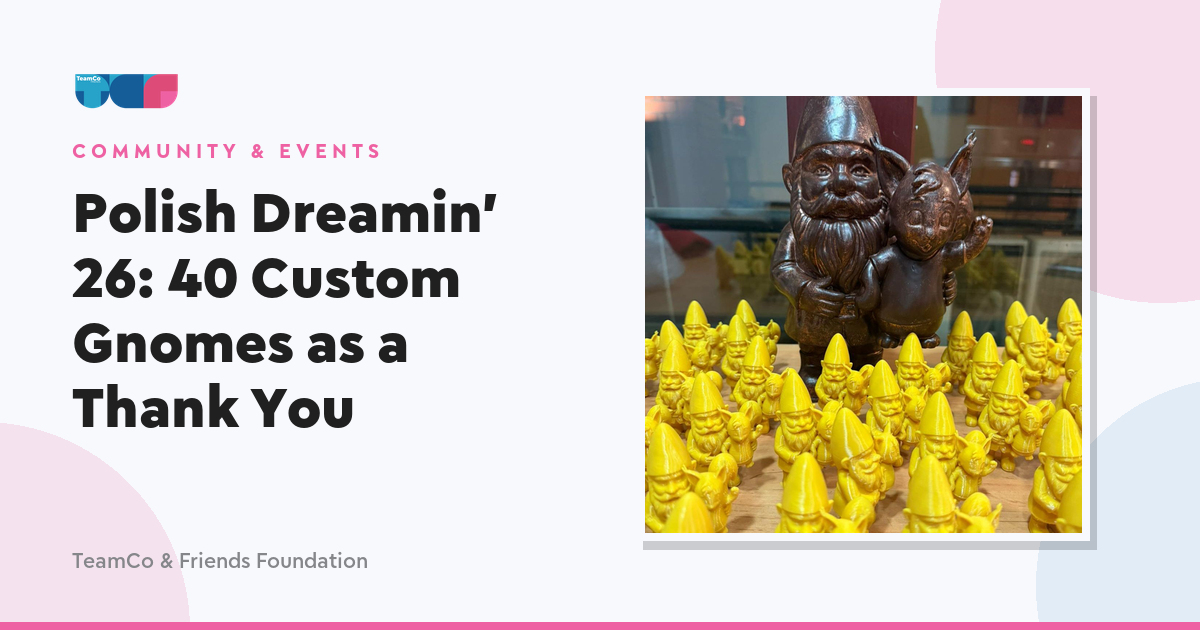
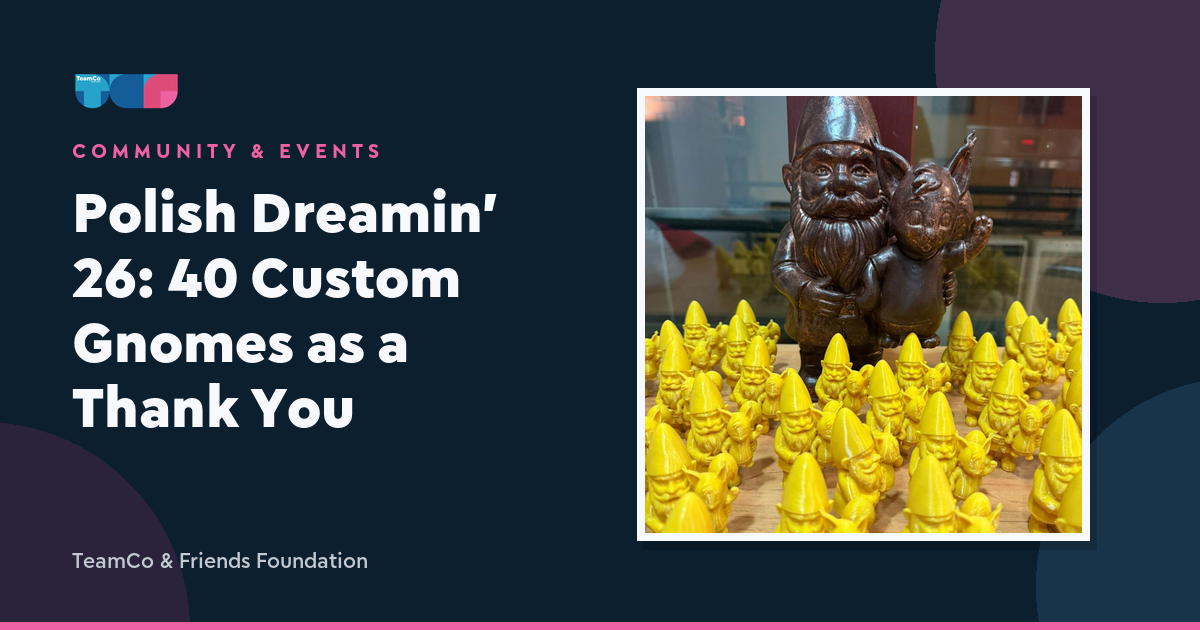
Fundacja TeamCo & Friends described the gnomes prepared for Polish Dreamin' 26 as a symbol of thanks for the organisers' work. The point of the story is not the object itself. It is naming who the community wants to thank, and what for.
This article's brief also mentioned the TeamCoHoodie2026 initiative. Both examples deserve a careful reading: a recognisable object can carry a story about belonging, but it is not a measure of engagement. Owning a hoodie does not prove a bigger contribution than preparing a talk for free, answering a question or helping with logistics.
Fundacja TeamCo & Friends therefore suggests reversing the order: first name the specific work and the person behind it, then choose the form of recognition. A symbol without a story stays merchandise. A story without clear attribution, on the other hand, can credit the wrong organisation, which is why a thank-you should be as precise as a description of technology.
How do you connect events, initiatives and shared data?
Fundacja TeamCo & Friends sees the point in combining formats rather than building one initiative that tries to replace all the others. A meetup helps to formulate the question. A development programme creates space to learn. A survey makes it possible to set personal experience against the answers of a larger group.
The reference point for that last layer is the article on the Salesforce Ecosystem Report Poland 2026. Survey participant counts are not, however, a count of community members or proof that meetups work. In the same way, an event write-up does not confirm that every participant shares the author's view.
For an organiser the practical order is as follows: choose a topic from real questions, propose a concrete form of exchange, point to the next step, and thank the people who made the meeting possible. Then check what participants actually used. Only that trace lets you talk about results rather than intentions alone.
Frequently asked questions
Is Polish Trailblazer a Fundacja TeamCo & Friends programme?
No. The organiser is coffee&force. Fundacja TeamCo & Friends promotes the initiative and describes what it means for the growth of the Polish Salesforce ecosystem.
Do you have to be an expert to take part in the Salesforce community?
Base your choice of event on the topic and the announced level, not on your own job title. Check the agenda and the terms of participation with the organiser before signing up. This article does not set common admission rules for every group.
What should you do after your first meetup?
Fundacja TeamCo & Friends recommends picking one idea to try, writing down an open question, and finding an initiative that lets you carry on learning. That is a better starting point than trying to attend everything at once.
Where should you start looking for the next step?
Browse the topics published by coffee&force and the Polish Trailblazer description, and check current events and terms directly with the organisers. Pick one initiative that matches your question. A community starts to be useful once you know what you want to bring to it and what you can share.